Payday Super Is Coming — and Small Businesses Can’t Afford to Ignore It
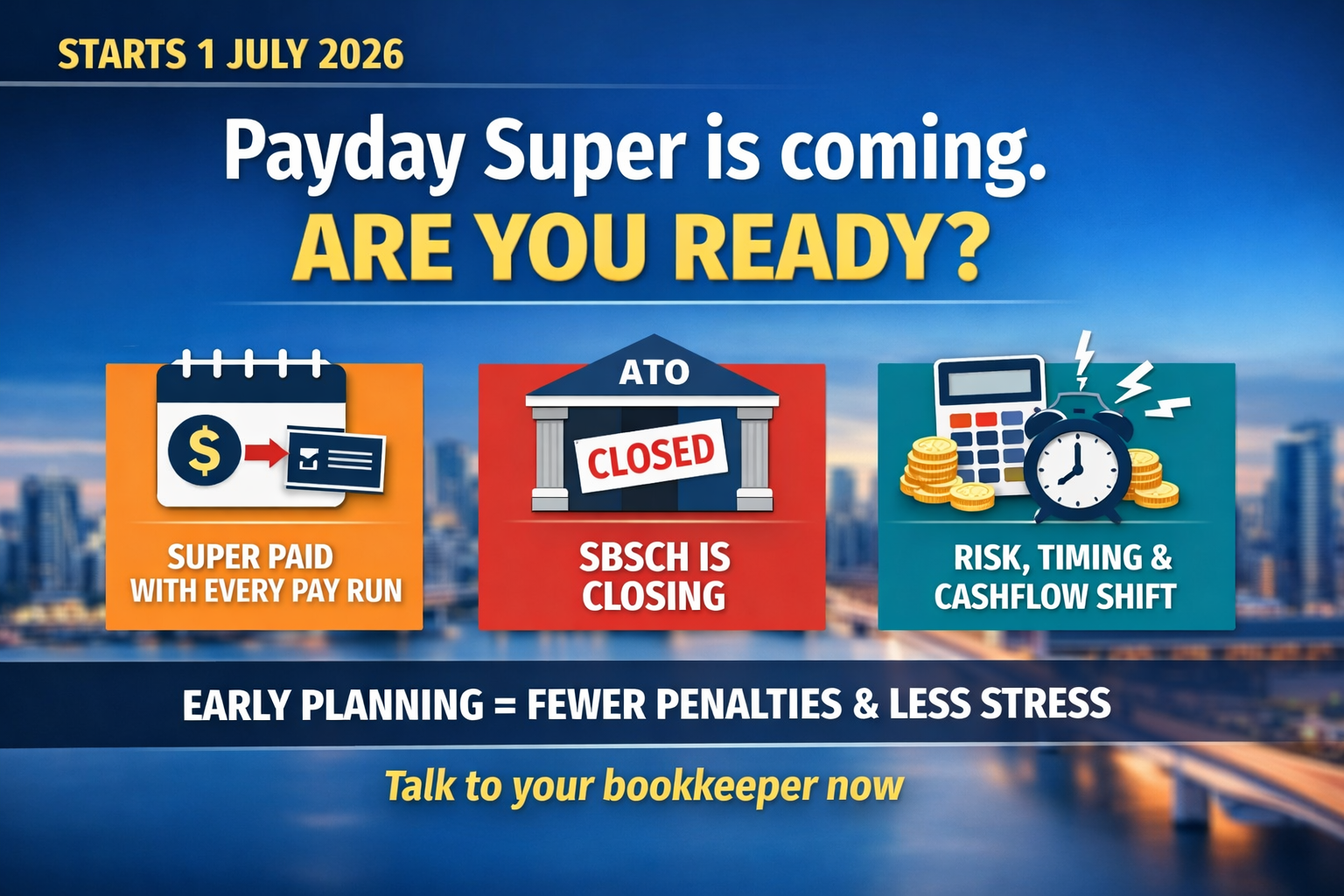
From 1 July 2026, the way Australian businesses pay superannuation will fundamentally change. Super will need to be paid at the same time as wages, every pay cycle — not quarterly.
At the same time, the ATO’s Small Business Superannuation Clearing House (SBSCH) will permanently close on 30 June 2026. This removes the only free, government-run clearing house that guaranteed compliance once payments were submitted.
Many small business owners are unaware this protection is disappearing — and that the risk is about to shift entirely onto them.
What’s Changing — and Why It Matters
Until now, SBSCH allowed small employers to:
- Pay super through a free platform
- Lock in compliance as soon as payment was submitted
Once SBSCH closes, businesses will need to rely on commercial clearing houses, many of which:
- Charge per-employee, per-pay-run fees
- Only confirm compliance once funds reach the employee’s super fund
- Offer limited visibility on processing delays
Under Payday Super, late means non-compliant, regardless of the reason.
The Real Impact: Timing, Cashflow and Risk
Timing
Super must be paid with wages. This puts pressure on:
- Payroll processes
- Approval workflows
- Pay-run accuracy
Cashflow
More frequent payments mean:
- Existing super backlogs must be cleared
- Cash buffers must be built
- Forward planning becomes critical
Businesses already under cashflow stress are the most exposed.
Responsibility
The ATO has made its position clear:
- Employers carry 100% of the compliance risk
- Clearing houses, banks, and super funds are not an excuse
- Penalties may include Super Guarantee Charges, audits, interest and fines
Why Acting Now Matters
The Australian Bookkeepers Association (ABA) is urging businesses to prepare early.
Bookkeepers are on the frontline of this change — helping businesses restructure payroll, strengthen cashflow, and keep records airtight well before 2026.
Waiting until the last minute will be costly.
How to Prepare Now
To stay compliant and reduce risk, businesses should:
- Understand the change
Know how Payday Super affects your payroll and cashflow. - Align payroll timing
Ensure super payments match wage payments accurately. - Strengthen cashflow
Clear any outstanding super, build reserves, and forecast ahead. - Review systems
Confirm your payroll software and clearing house can handle real-time payments. - Keep clear records
Evidence of payment timing will be essential under the new rules.
How NBK Services Can Help
We help businesses prepare — not panic.
We can:
- Review your payroll and super setup
- Help transition from SBSCH to a compliant clearing house
- Assist with cashflow forecasting and planning
- Keep you compliant through the transition and beyond
The earlier you act, the smoother the change will be.
And if you’d like support reviewing your current setup or want peace of mind that you’re compliant well before these changes take effect, we’re here to help.
Warm regards,
Jennifer Van De Wouw
Founder & CEO
NBK Services Pty Ltd
Strategic bookkeeping | Payroll | Compliance | Planning & Strategy
📞 1300 914 330
🌐 www.nbkservices.com.au
👉 Book a Payday Super Readiness Review today.